Review Paper
Examining Generative AI Influence on International Consumer Behaviour
Abstract
Generative Artificial Intelligence (GenAI) is emerging as an important technology in international marketing by changing how businesses communicate with consumers, understand purchasing preferences, and create personalized customer experiences. Unlike traditional marketing technologies that primarily analyse existing data and predict consumer behaviour, generative AI can produce new text, images, product descriptions, advertisements, recommendations, and conversational responses. These capabilities allow businesses to customize their marketing communication for consumers across different countries, languages, cultures, and market segments. This research examines the influence of generative AI on international consumer behaviour and its role in global marketing personalization. It explores how AI-generated content, conversational assistants, personalized recommendations, and culturally adapted advertising may influence consumer awareness, trust, engagement, purchase decisions, and brand loyalty. It also considers the opportunities and challenges associated with the adoption of generative AI, including privacy concerns, algorithmic bias, cultural misunderstandings, misinformation, and the risk of excessive personalization. The study adopts a qualitative, descriptive research approach based on secondary sources, including academic journal articles, research papers, and reports published by established organizations. Existing research indicates that generative AI can support more relevant and convenient consumer experiences, while also influencing how consumers discover products and evaluate brands. However, its effectiveness depends on the accuracy of generated information, transparency, cultural relevance, consumer trust, and responsible data management. The research concludes that generative AI can strengthen international marketing when it is used to support rather than replace human judgment. Businesses should combine AI-driven personalization with cultural understanding, consumer privacy protection, and human oversight to develop effective and trustworthy global marketing strategies.
Keywords: Generative Artificial Intelligence, International Consumer Behaviour, Global Marketing, Marketing Personalization, Consumer Decision-Making, AI-Generated Content, Customer Experience, Consumer Trust, Cross-Cultural Marketing, Digital Marketing
I. Introduction
A. Background of the Study
International marketing has changed significantly with the development of digital technologies, online shopping platforms, social media, and artificial intelligence. Businesses no longer depend only on traditional advertising methods to communicate with consumers. They increasingly use digital channels to understand customer preferences, provide product information, respond to enquiries, and create marketing campaigns for different markets.
Consumer behaviour refers to the processes through which individuals recognize needs, search for information, compare alternatives, make purchasing decisions, use products, and evaluate their experiences. Consumer behaviour is influenced by several factors, including income, lifestyle, personal preferences, social influences, culture, language, and economic conditions. These factors become particularly important in international markets because consumers from different countries may have different expectations, purchasing habits, and perceptions of brands.
Artificial intelligence has already supported marketing through predictive analytics, recommendation systems, automated customer service, and targeted advertising. Generative AI represents a further development because it can create new content and interact with consumers through natural language. According to Hermann and Puntoni (2024), the development of generative AI creates new opportunities and challenges for understanding consumer behaviour, extending the role of AI beyond prediction towards content generation and direct consumer interaction.
Generative AI can produce advertising messages, product descriptions, images, email campaigns, conversational responses, and localized marketing content. A business operating in India, Japan, Germany, and the United States, for example, could use AI tools to prepare different versions of a campaign for each market. These versions could reflect differences in language, product preferences, cultural references, and communication styles. However, translating a marketing message is not the same as adapting it to a local market. Consumers may interpret the same image, phrase, colour, promotional offer, or brand message differently depending on their cultural background and personal experiences. Consequently, successful international personalization requires more than generating a large volume of content. It requires an understanding of local consumer expectations and responsible use of customer data.
B. Meaning of Generative AI in Marketing
Generative AI refers to artificial intelligence systems capable of producing new content, such as written text, images, audio, video, and conversational responses. These systems learn patterns from data and use those patterns to generate outputs in response to instructions or contextual information. In marketing, generative AI may be used for creating advertisements and promotional messages, generating product descriptions for international e-commerce websites, developing personalized product recommendations and shopping assistance, responding to customer questions through conversational interfaces, adapting campaign content to different languages and markets, producing alternative versions of creative content for testing, and supporting marketers in analysing customer feedback and identifying emerging preferences.
Generative AI does not independently understand every cultural or emotional factor affecting consumers. Its outputs depend on the quality of the information provided, the capabilities of the system, and the review processes used by the business.
C. Meaning of International Consumer Behaviour
International consumer behaviour refers to the study of how consumers in different countries and cultural environments search for, evaluate, purchase, and respond to products and services. International consumers may differ in their preferred communication styles, sensitivity to price, brand loyalty, payment preferences, shopping channels, expectations of customer service, and willingness to share personal information.
For example, a consumer may prefer detailed product specifications and independent reviews, while another may place greater importance on recommendations from friends, influencers, or community members. These differences are not universal rules about nationalities; individual consumers within the same country can also have very different preferences. Understanding these differences allows international businesses to adapt their marketing strategies to local conditions rather than assuming that one global campaign will be equally effective everywhere.
D. Meaning of Global Marketing Personalization
Global marketing personalization is the process of tailoring marketing communication, product recommendations, offers, and customer experiences to the needs and preferences of consumers across different markets. Traditional personalization may use a customer’s previous purchases, browsing history, or broad customer segment to recommend relevant products. Generative AI can extend this approach by producing individualized explanations, conversational responses, and different versions of marketing content.
For example, an international fashion retailer may provide a customer with product recommendations based on their selected preferences and generate descriptions in the customer’s preferred language. The retailer may also adapt the presentation of products to local seasonal demand, provided the information is accurate and the use of customer data is appropriate. Personalization can make shopping more convenient and relevant. However, excessive or poorly designed personalization can make consumers feel monitored, manipulated, or uncomfortable. Therefore, businesses must balance relevance with privacy, transparency, and consumer choice.
E. Rationale of the Study
The growing use of generative AI creates a need to understand how the technology affects consumers and how international businesses can use it responsibly. While AI offers opportunities to improve communication and marketing efficiency, its effects on trust, purchase intentions, and customer relationships may vary across individuals and markets. This study is important because it connects three areas: generative AI technology, international consumer behaviour, and global marketing personalization. Examining these areas together can help businesses understand not only how AI generates marketing content, but also how consumers may react to that content and what conditions are necessary for effective personalization. The study therefore focuses on the opportunities, behavioural effects, managerial implications, and risks associated with integrating generative AI into international marketing strategies.
F. Scope of the Study
The study focuses on generative AI applications in digital and international marketing, particularly personalized advertising, conversational shopping assistance, AI-generated product information, and localized marketing communication. It considers consumer awareness, engagement, trust, purchase decisions, and loyalty, along with differences in cultural context and privacy expectations. The research is based on published secondary information and does not claim to measure the behaviour of a newly surveyed group of consumers.
II. Literature Review
A. Review of Journal Articles
The literature on AI and consumer behaviour has expanded rapidly, with several recent studies directly addressing generative AI’s role in marketing. Hermann and Puntoni (2024), published in the Journal of Business Research, examine the development of AI in consumer behaviour research, moving from predictive applications towards generative systems. The authors discuss how AI influences consumer decision-making and consumer reactions to automated systems. The work provides a useful foundation for understanding why generative AI should be studied as more than a marketing automation tool: it can also participate directly in consumer interactions and content creation.
Jain et al. (2024), published in the Journal of Consumer Behaviour, present a hybrid review of 107 articles on AI and consumer behaviour. They identify major research themes involving consumer trust and acceptance, engagement, attitudes, personality, and decision-making. The review demonstrates that AI’s influence on consumers involves several interconnected factors rather than a single outcome. Consumers may respond differently depending on their experiences, expectations, and perceptions of AI.
A second paper by Jain et al. (2024) in the Journal of Consumer Behaviour examines the potential influence of generative AI on consumer engagement, purchase decisions, and technology interaction. The authors discuss how personalized recommendations and interactive shopping experiences may change the relationship between consumers and businesses. They also highlight the need for research and practical strategies that address the changing consumer environment. This article directly relates to the role of generative AI in shaping international consumer experiences and marketing personalization.
A comparative study published in the Journal of Retailing and Consumer Services (2024) examines how recommendations from ChatGPT compare with recommendations from conventional AI recommender systems when consumers form a set of products they are considering. The study reports that ChatGPT recommendations and conventional recommendation systems can influence the consumer consideration process in similar ways, and that ChatGPT-recommended products may be more likely to be adopted in the studied context. Its findings also indicate that brand awareness can affect the relationship between recommendations and consumer responses. The research suggests that conversational generative AI may become an influential source of product information, particularly when consumers are unfamiliar with available brands. The results should not be assumed to apply equally to every product, country, or consumer group.
A study in the Journal of Consumer Marketing (2024) investigates how human-like characteristics and transparency in generative AI marketing communication influence consumer trust and behavioural intentions. Using a survey of 444 participants, it examines chatbot and promotional-advertisement contexts. The study provides evidence that the way AI communication is presented, including how human-like it appears and how transparently it is communicated, matters for consumer responses. The article supports examining disclosure, trust, and the design of AI-generated marketing communication as factors that may influence purchase intentions.
A 2025 study in Computers in Human Behavior examines consumer perceptions of AI-driven personalization in social media marketing. Its findings highlight the importance of perceived usefulness and trust, while identifying privacy concerns as a challenge to effective personalization. It helps explain why personalization alone is insufficient: consumers must also consider the resulting experience useful and trustworthy, and they must have confidence in how their information is handled.
B. Review of Research Reports and Published Articles
McKinsey & Company (2025), in Unlocking the Next Frontier of Personalized Marketing, discusses how AI and generative AI can help businesses deliver personalized experiences to diverse consumer groups at scale. It considers the difficulty of communicating effectively with consumers who differ in language, culture, socioeconomic background, and personal preferences. The report connects generative AI with the practical challenge of creating relevant marketing across multiple international markets.
Accenture (2024), in The Empowered Consumer, highlights consumer difficulty in navigating excessive product information and choices. The report states that 74% of consumers surveyed in the final quarter of 2023 had abandoned purchases because they felt overwhelmed, while 71% reported no improvement or an increase in the time and effort required to make purchase decisions. These figures relate to the surveyed consumers and should not be interpreted as universal statistics for every country or shopping situation. The report suggests that generative AI could help consumers manage information overload by summarizing information, comparing options, and making product discovery more convenient.
The OECD (2024) report on AI, Data Governance and Privacy examines the relationship between AI development, data governance, privacy principles, and international cooperation. Its report discusses the importance of aligning AI governance and privacy protection across different legal and policy environments. The report is important for international marketing because businesses may process consumer data across jurisdictions with different regulatory requirements. Responsible personalization therefore requires appropriate data management and attention to applicable local laws.
C. Summary of the Literature Review
The reviewed literature suggests that generative AI can affect consumer behaviour through personalized communication, conversational product discovery, recommendations, and automated customer support. Existing studies also indicate that trust, transparency, perceived usefulness, privacy concerns, and brand familiarity may shape consumer responses. However, the benefits of personalization are not automatic. Poor-quality recommendations, excessive automation, cultural mistakes, and unclear data practices may reduce consumer confidence. The literature therefore supports an approach in which businesses evaluate both the commercial benefits and the behavioural risks of generative AI.
| Source | Year | Type of Evidence | Relevance to the Study |
|---|---|---|---|
| Hermann & Puntoni | 2024 | Academic research article | AI and consumer decision-making; shift from predictive to generative AI |
| Jain et al. (review) | 2024 | Literature review of 107 articles | Trust, engagement, attitudes, and adoption of AI |
| Jain et al. (impact) | 2024 | Conceptual research paper | Generative AI effects on engagement and purchase decisions |
| ChatGPT comparison study | 2024 | Comparative empirical study | Product discovery and formation of consideration sets |
| Anthropomorphism study | 2024 | Survey of 444 participants | Transparency, human-like communication, and purchase intentions |
| Teepapal & co-authors | 2025 | Empirical study | AI-driven personalization perceptions in social media engagement |
| Accenture | 2024 | Consumer research report | Information overload and purchase difficulties |
| McKinsey & Company | 2025 | Industry report | Personalization at international scale |
| OECD | 2024 | Institutional policy report | Privacy, data governance, and international cooperation |
III. Research Gap
Although research on artificial intelligence and consumer behaviour has expanded, several areas require further investigation. First, there is limited integration of international consumer behaviour and generative AI. Many studies examine AI adoption, personalization, or purchase intention separately. More integrated research is needed to understand how generative AI influences consumer behaviour across different international markets. Second, AI-generated marketing messages may be grammatically correct but culturally inappropriate. More research is required to establish how cultural expectations, local expressions, communication styles, and consumer values influence responses to AI-generated content.
Third, the relationship between personalization and consumer trust requires further study. Personalized marketing may improve relevance, but highly specific messages can also make consumers uncomfortable. The conditions under which consumers interpret personalization as helpful rather than intrusive require further investigation. Fourth, there is limited long-term evidence on consumer loyalty. Many studies focus on immediate responses, such as engagement, attitudes, or purchase intentions. Further longitudinal research is needed to determine whether generative AI leads to lasting customer satisfaction, repeat purchases, and brand loyalty.
Fifth, a gap exists between stated purchase intentions and actual behaviour. A consumer may express an intention to purchase a recommended product without completing the transaction. More research should compare survey responses with actual purchasing behaviour. Sixth, there is unequal access and adoption across markets. Access to AI tools, internet connectivity, language support, digital literacy, and purchasing power varies between countries and consumer groups. These differences may affect who benefits from AI-enabled personalization. Finally, there is limited comparative evidence across international markets. Research that directly compares consumer responses across multiple countries using consistent measures remains important for understanding whether the same personalization strategy works equally well in different markets.
Research gap statement. The central research gap is the need for an integrated understanding of how generative AI-driven personalization influences international consumer behaviour while accounting for cultural differences, consumer trust, privacy expectations, and variations in purchasing decisions across markets. This study addresses the gap through a structured synthesis of existing research and the development of practical implications for international marketers.
IV. Objectives of the Study
A. Primary Objective
To examine the influence of generative artificial intelligence on international consumer behaviour and its role in global marketing personalization.
B. Secondary Objectives
The secondary objectives of the study are as follows:
- To understand the concept and major marketing applications of generative AI.
- To examine how AI-generated content and personalized recommendations may influence consumer awareness and purchase decisions.
- To analyse the role of generative AI in adapting marketing communication to different languages and cultural environments.
- To explore the relationship between AI personalization, consumer trust, satisfaction, and brand loyalty.
- To identify the benefits of generative AI for international marketing efficiency and customer experience.
- To examine the challenges associated with privacy, transparency, algorithmic bias, misinformation, and cultural sensitivity.
- To suggest practical strategies for businesses seeking to implement responsible AI-driven personalization in global markets.
- To identify opportunities for future research into generative AI and international consumer behaviour.
V. Research Methodology
A. Research Design
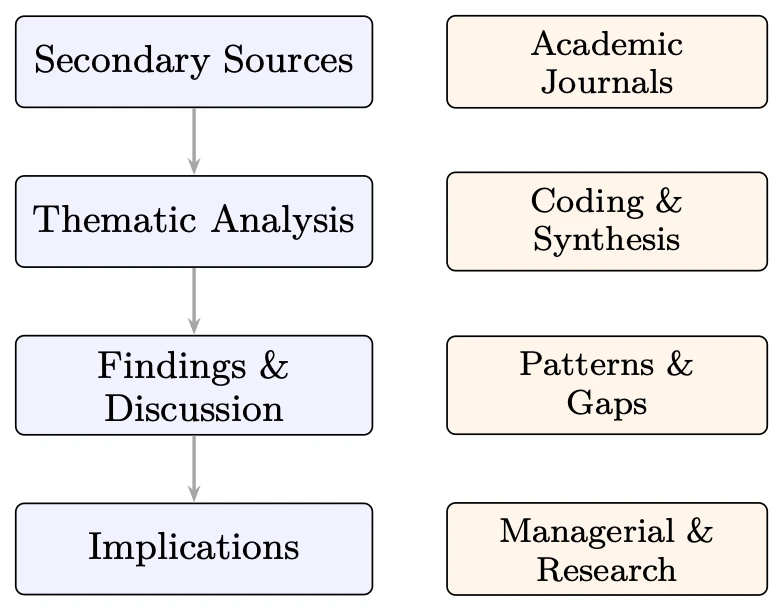
The study adopts a qualitative, descriptive, and exploratory research design. It examines the relationship between generative AI, international consumer behaviour, and global marketing personalization by reviewing existing academic literature and relevant institutional and industry publications. The descriptive approach is used to explain current applications and potential effects of generative AI. The exploratory approach helps identify emerging issues, research gaps, and opportunities for further investigation.
B. Nature of the Study
The study is based on secondary data. It does not involve a newly conducted questionnaire, interviews, experiments, or original consumer observations. Secondary research is appropriate for this paper because the topic involves an evolving technology for which academic studies, published reviews, and organizational reports can provide a foundation for understanding current developments.
C. Sources of Data
The study draws on the following sources. Academic journals: articles from the Journal of Business Research, Journal of Consumer Behaviour, Journal of Consumer Marketing, Journal of Retailing and Consumer Services, and Computers in Human Behavior. Institutional publications: reports and policy papers from the OECD. Industry research: publications from McKinsey & Company and Accenture. Research reviews: published literature reviews on AI adoption, consumer trust, and consumer decision-making.
D. Data Collection Procedure
Relevant sources were identified based on their relationship to the research topic. The review focused on literature covering generative AI applications in marketing, consumer behaviour and purchase decisions, AI-generated recommendations and conversational shopping, global personalization and localization, and consumer trust, privacy, and responsible AI use. The selected material was organized according to recurring themes, including personalization, decision-making, cultural adaptation, trust, and business performance.
E. Method of Analysis
A thematic analysis of the secondary literature was used. The sources were examined to identify common themes, differences in findings, business opportunities, and unresolved questions. The findings were then organized into five broad areas: (i) consumer decision-making and product discovery, (ii) personalization and international marketing communication, (iii) consumer trust and engagement, (iv) risks and ethical considerations, and (v) managerial implications and future research. This approach provides a structured interpretation of existing evidence. It does not establish new causal relationships or calculate original statistical estimates.
F. Scope and Limitations of the Methodology
The research focuses mainly on digital marketing and consumer-facing applications of generative AI. It draws on publications available through the research sources consulted for this paper, including studies published between 2024 and 2025. The evidence may not represent all industries, countries, consumer groups, or later technological developments. Differences in research methods and sample populations also limit direct comparisons between individual studies.
VI. Data Collection and Dataset
A. Nature of the Dataset
Since the study uses secondary research, its dataset consists of published academic studies, literature reviews, and industry or institutional reports. These sources provide evidence about consumer reactions to AI, personalization practices, marketing applications, and privacy concerns. Table II summarizes selected sources and the information they contribute to the study.
| Source | Nature | Relevance |
|---|---|---|
| Hermann & Puntoni (2024) | Academic article | AI and consumer decision-making |
| Jain et al. (2024) review | Literature review (107 articles) | Trust, engagement, adoption |
| ChatGPT study (2024) | Comparative empirical study | Product discovery |
| Anthropomorphism study (2024) | Survey of 444 participants | Transparency and trust |
| Accenture (2024) | Consumer research report | Information overload |
| McKinsey (2025) | Industry report | Personalization at scale |
| OECD (2024) | Institutional policy report | Privacy and data governance |
B. Secondary Data Collection Framework
For the purpose of this study, the reviewed material can be grouped into the following categories. Category 1: Consumer decision-making. This category includes studies examining how AI-generated information and recommendations may influence product discovery, evaluation of alternatives, and purchase intentions. Category 2: Marketing personalization. This category includes reports and articles on personalized content, AI-generated advertising, localized communication, and customer engagement. Category 3: Consumer trust and privacy. This category covers consumer confidence in AI-generated communication, transparency, privacy expectations, and concerns about the use of personal information. Category 4: International marketing challenges. This category covers the implications of cultural differences, language adaptation, international data governance, and the difficulty of implementing consistent marketing strategies across markets.
C. Data Quality and Interpretation
The selected sources differ in their methods, research populations, and purposes. Academic studies may focus on particular experiments or consumer samples, while industry reports may use commercial surveys and institutional reports may emphasize policy and governance. Therefore, the findings are interpreted thematically rather than combined into a single statistical dataset. Percentages from separate reports are not added together or treated as directly comparable. The study uses the published findings to identify patterns and implications. It does not claim to have collected original responses from international consumers.
VII. Analysis and Findings
This section presents the main findings from the reviewed literature. The analysis is organized according to the study’s objectives.
A. Influence on Consumer Decision-Making
Generative AI may influence consumer decision-making by changing how consumers search for information, compare products, and evaluate available alternatives. Traditional online shopping often requires consumers to visit multiple websites, read product descriptions, compare prices, and search for reviews. Generative AI can simplify these activities by providing conversational answers, summarizing product information, and explaining differences between alternatives. For example, a consumer searching for a laptop could ask an AI assistant to compare products according to price, battery life, portability, and intended use. The assistant may present the information in a structured format that makes the alternatives easier to understand.
Research comparing ChatGPT recommendations with conventional AI recommendation systems suggests that generative AI can influence which products consumers consider. This indicates that AI assistants may become an additional source of influence during the consumer decision-making process. However, AI-generated recommendations do not guarantee a purchase. Consumers may still compare information from other sources, consider their budgets, consult other people, or reject recommendations that appear inaccurate.
Finding 1. Generative AI can make product discovery and comparison more convenient, but its influence on actual purchases depends on relevance, credibility, consumer needs, and other decision-making factors.
B. Influence on Global Marketing Personalization
Generative AI allows businesses to create different versions of marketing content for different customer groups. It can support personalized product descriptions, advertisements, email messages, conversational responses, and promotional campaigns. For example, an international cosmetics company could use generative AI to prepare product information in several languages and develop different campaign messages for different consumer segments. The company could maintain its core brand identity while adapting wording and presentation to local markets.
McKinsey’s 2025 report discusses how AI and generative AI can help businesses personalize customer experiences across diverse populations and markets. The principal advantage is scalability. Instead of manually creating every variation of a campaign, marketers can use AI to produce initial versions and then review them for accuracy, suitability, and brand consistency. Nevertheless, personalization should be based on relevant and appropriately obtained information. A campaign that uses incorrect assumptions about a consumer may be less effective than a general but accurate message.
Finding 2. Generative AI can help businesses deliver relevant marketing communication at scale, provided that personalization is supported by accurate data and appropriate human review.
C. Influence of Language and Cultural Adaptation
Language and culture are important considerations in international marketing. A direct translation may preserve the literal meaning of a message but fail to communicate its intended tone, humour, emotional appeal, or cultural significance. Generative AI can support multilingual marketing by producing translated drafts, adjusting tone, and creating alternative versions of product descriptions and advertising messages. It may also help businesses respond to customer questions in different languages.
For example, a travel company promoting a destination in several countries could adapt its content to different language preferences and travel interests. However, any claims about local customs, religious practices, regulations, or cultural preferences should be verified. AI systems can generate culturally inappropriate expressions or rely on stereotypes when information about a market is incomplete. Local marketing specialists therefore remain important for checking cultural meaning and suitability.
Finding 3. Generative AI can improve the speed and scale of localization, but effective international personalization requires local knowledge and human validation.
D. Influence on Consumer Trust and Purchase Intentions
Consumer trust is important when marketing communication is generated or delivered by AI. Consumers need to believe that product information is accurate, recommendations are relevant, and the business is acting responsibly. A study published in the Journal of Consumer Marketing examined the role of anthropomorphism and transparency in generative AI marketing communication using 444 participants. Its focus demonstrates that both the presentation of AI and the transparency of communication are relevant to understanding consumer responses.
Human-like communication may make an AI assistant easier to interact with, but it can also create unrealistic expectations about its capabilities. If the system presents uncertain information confidently, consumers may make decisions based on incorrect assumptions. Businesses can support trust by clearly identifying AI interactions where appropriate, providing accurate information, making human assistance available, and correcting errors promptly.
Finding 4. Consumer trust is an important condition for effective AI-driven marketing. Personalization is more likely to be sustainable when it is transparent, reliable, and designed around consumer needs.
E. Influence on Information Overload and Convenience
Consumers often encounter large amounts of information when shopping online. Product listings, advertisements, sponsored content, reviews, and promotional messages can make it difficult to identify relevant options. Accenture’s 2024 report found that 74% of surveyed consumers had abandoned purchases because they felt overwhelmed in the final quarter of 2023. The report also found that 71% perceived no improvement or an increase in the time and effort required to make purchase decisions.
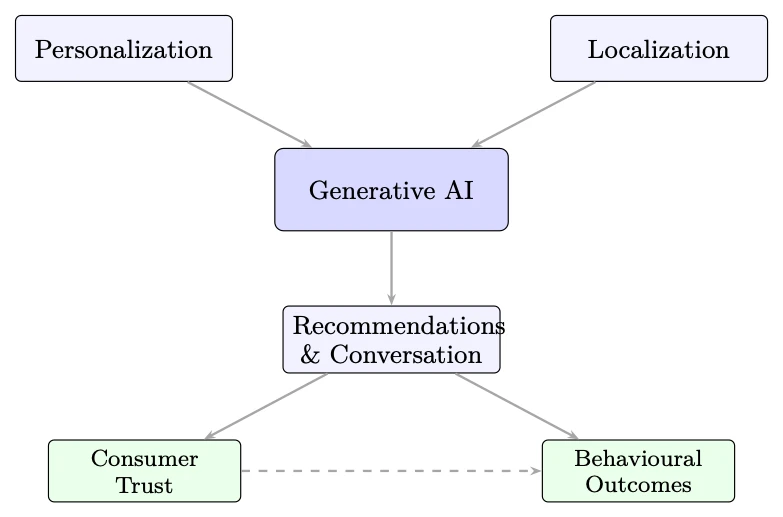
Generative AI may help address this problem by summarizing product information, answering questions, and explaining the advantages and disadvantages of alternatives. However, AI can also increase information overload if it generates excessive recommendations or promotional content. The value of the technology therefore depends on whether it simplifies the consumer’s decision rather than merely increasing the volume of available information.
Finding 5. Generative AI has the potential to improve convenience when it reduces unnecessary information and helps consumers make informed decisions.
F. Influence on Customer Engagement and Brand Relationships
Generative AI can support engagement through interactive shopping assistants, personalized messages, product suggestions, and automated responses to customer enquiries. These interactions may encourage consumers to spend more time exploring a product or seeking clarification before purchasing. They can also help businesses respond to customer questions outside normal business hours. However, customer engagement should not be measured only by clicks, message volume, or time spent on a platform. A large number of interactions does not necessarily indicate satisfaction or loyalty. AI-generated communication may damage the customer relationship if it feels repetitive, ignores the customer’s actual problem, or prevents access to a human representative.
Finding 6. Generative AI can support customer engagement, but long-term relationships depend on the quality and usefulness of the experience rather than automation alone.
G. Consumer Privacy and Personalization Concerns
Personalized marketing frequently depends on information about customer interests, shopping behaviour, preferences, and previous interactions. The use of AI can increase the scale and complexity of processing this information. The OECD’s 2024 work on AI, data governance, and privacy highlights the need to align AI development with privacy principles and improve cooperation across different policy environments. Consumers may appreciate relevant product suggestions but object to personalization when they do not understand how their information was obtained or used. Businesses should therefore collect only information necessary for legitimate purposes, protect it appropriately, provide clear privacy information, and follow applicable data protection requirements.
Finding 7. Privacy protection is not separate from personalization. It is an important condition for maintaining consumer confidence and sustainable international marketing relationships.
H. Summary of Findings
Table III consolidates the seven research areas with their main findings drawn from the literature.
| Research Area | Main Finding |
|---|---|
| Decision-making | AI explanations and recommendations influence product consideration |
| Personalization | AI helps generate tailored content at scale |
| Localization | AI supports multilingual communication, but cultural review remains necessary |
| Consumer trust | Transparency and reliable information matter for consumer responses |
| Convenience | AI simplifies research, but excessive content may create overload |
| Engagement | Conversational interactions improve access to assistance, but quality matters |
| Privacy | Responsible data practices are necessary for trustworthy personalization |
These findings represent a synthesis of the reviewed literature, not results from a new consumer survey. They indicate that generative AI’s influence depends on how the technology is designed, implemented, and evaluated.
VIII. Discussion
The findings indicate that generative AI is changing the relationship between businesses and consumers by making marketing communication more interactive, adaptable, and responsive. However, its influence should be understood as a combination of technological capabilities and consumer perceptions rather than as an automatic improvement in marketing performance.
A. Shift from Mass Marketing towards Individualized Communication
Traditional mass marketing communicates a largely standardized message to a broad audience. Segment-based marketing creates different messages for groups with similar characteristics. Generative AI may extend this process by producing content that responds to individual questions, preferences, and contexts. This development can make the consumer experience more relevant. Nevertheless, businesses must ensure that personalization remains useful and does not become unnecessarily intrusive.
B. Consumers as Active Participants in Marketing
Generative AI enables consumers to ask questions, request comparisons, clarify product features, and explore alternatives through conversation. This changes the consumer’s role from simply receiving advertising to actively requesting information. At the same time, AI-generated responses may influence which products consumers discover and which brands they consider. Businesses therefore need to ensure that their product information is accurate and that marketing practices do not mislead consumers.
C. Balance between Global Consistency and Local Relevance
International companies must maintain recognizable brand identities while adapting their communication to local markets. Generative AI can help achieve this balance by creating different versions of content from a shared marketing strategy. However, local relevance cannot be guaranteed through translation alone. Language, social expectations, consumer purchasing power, and legal requirements differ between markets. Human expertise is necessary to ensure that AI-generated content reflects the intended meaning.
D. Trust as a Foundation of Personalization
The literature suggests that the usefulness of personalization depends partly on whether consumers trust the business and the technology it uses. A relevant recommendation may create value, while an inaccurate or overly intrusive recommendation may damage the relationship. Transparency, accuracy, privacy protection, and accessible human support should therefore be treated as core elements of AI-driven marketing rather than as secondary considerations.
E. Implications for International Consumer Behaviour
Generative AI may influence consumer awareness, evaluation of alternatives, purchase intentions, and post-purchase communication. However, its effects are likely to vary by product type, market conditions, digital literacy, brand familiarity, and individual preferences. The evidence does not justify the conclusion that generative AI will always increase sales or loyalty. Instead, it suggests that AI can create opportunities for better consumer experiences when the system provides genuine value. Overall, the discussion supports a balanced interpretation: generative AI can strengthen global marketing personalization, but its effectiveness depends on the quality of implementation and the willingness of consumers to trust and use the resulting experiences.
IX. Managerial and Business Implications
The findings have several practical implications for businesses that operate internationally or plan to expand into foreign markets.
Develop a clear AI marketing strategy. Businesses should identify specific problems that generative AI is expected to solve, such as slow customer responses, repetitive content creation, inconsistent product descriptions, or difficulties localizing campaigns. The technology should be introduced to meet defined business objectives rather than adopted simply because it is new.
Use AI for scalable personalization. Marketing teams can use generative AI to prepare different versions of advertisements, product descriptions, email campaigns, and customer service responses. Human marketers should review important content before publication to ensure factual accuracy, appropriate tone, brand consistency, and legal compliance.
Adapt marketing to local markets. International businesses should combine AI capabilities with local market knowledge. Before launching a campaign, managers should evaluate language accuracy, cultural relevance, local product demand, pricing expectations, and advertising requirements. Local employees, translators, and market specialists can help identify mistakes that automated systems may overlook.
Improve the customer decision-making experience. Businesses should use AI to help consumers understand products rather than simply persuade them to purchase. For example, an AI shopping assistant can explain product features, compare alternatives, clarify return policies, and identify limitations. Providing balanced information can help consumers make more informed decisions.
Maintain transparency and human assistance. Companies should explain relevant uses of AI and avoid giving consumers a misleading impression that automated communication is always produced or verified by a human. Customers should also be able to reach a human representative when their questions involve complex problems, complaints, sensitive information, or decisions requiring judgment.
Protect consumer information. Managers should ensure that customer data is collected and processed appropriately. They should establish clear rules for data access, retention, security, and permitted use. For international operations, these rules must account for applicable requirements in each market, including relevant data protection and consumer protection laws.
Train marketing employees. Generative AI does not eliminate the need for marketing expertise. Employees need training in prompt design, output verification, cultural sensitivity, privacy, copyright awareness, and responsible communication. Marketing teams should also understand when an AI-generated answer is uncertain and when specialist or human review is necessary.
Evaluate marketing performance. Managers should evaluate AI-driven personalization using measurable business and customer outcomes. Table IV summarizes suggested performance indicators. These indicators should be compared with an appropriate baseline or control group where possible. A business should not assume that a change in sales was caused by generative AI without considering other factors, such as price, seasonality, promotions, and market conditions.
| Performance Area | Suggested Indicator |
|---|---|
| Customer engagement | Engagement rate, relevant interactions |
| Sales performance | Conversion rate, revenue per customer |
| Customer experience | Satisfaction scores, feedback |
| Customer loyalty | Repeat-purchase rate, retention |
| Marketing efficiency | Campaign production time and cost |
| Content quality | Error rate, % requiring correction |
| Trust and privacy | Complaints, opt-out rates, incidents |
| International effect | Performance by market and language |
X. Challenges and Limitations
Despite its potential benefits, generative AI presents several challenges for international consumer marketing.
Data privacy and security. AI-driven personalization may require access to customer preferences, shopping history, or other information. Improper collection, disclosure, or storage of this information can damage consumer trust and expose businesses to legal and reputational risks. International companies must understand the relevant privacy requirements in each jurisdiction and establish appropriate data protection measures.
Inaccurate or misleading information. Generative AI can produce information that appears convincing but is inaccurate. Incorrect product specifications, prices, availability, warranties, or claims about product benefits can mislead consumers. Businesses must verify important product information and establish processes for correcting errors.
Cultural bias and stereotyping. AI-generated content may misunderstand cultural references or rely on broad assumptions about consumers. A message that is appropriate in one market may be unsuitable in another. Businesses should involve local experts and test marketing materials with relevant audiences before large-scale deployment.
Consumer distrust. Some consumers may be uncomfortable interacting with AI or receiving AI-generated advertising. Others may question whether recommendations are genuinely useful or primarily intended to increase spending. Clear communication, relevant recommendations, accurate information, and access to human assistance can help address these concerns.
Excessive personalization. Highly tailored marketing can create a sense of intrusion when businesses appear to know more about consumers than they expected. Companies should avoid unnecessary data collection, respect consumer choices, and provide reasonable controls over personalized communication.
Algorithmic bias and unequal representation. AI systems may generate less accurate or less relevant outputs for some languages, communities, or consumer groups than for others. This can create unequal customer experiences and exclude smaller or underrepresented markets. Businesses should evaluate output quality across languages and groups rather than assuming that performance in one market guarantees performance elsewhere.
Copyright and intellectual property. AI-generated text and images may raise questions concerning ownership, permitted use, training data, and similarities to existing material. Businesses should review relevant legal requirements, the terms of their AI tools, and the rights associated with materials used in campaigns.
Cost and technical integration. Introducing generative AI may require spending on software, data infrastructure, employee training, security, quality control, and integration with existing marketing systems. Smaller companies may find these investments difficult. They should assess the expected benefits and total costs before adopting large-scale systems.
Dependence on automation. Excessive reliance on AI may weaken human judgment or lead to repetitive marketing communication. Automated systems may also fail to recognize unusual situations that require empathy or specialist knowledge. Human oversight is particularly important for complaints, sensitive customer interactions, and high-impact business decisions.
Limitations of the present research. This study has several research limitations: it uses secondary data rather than collecting new consumer responses; the reviewed studies differ in methods, samples, and research contexts; evidence from individual countries or experiments cannot automatically be generalized to all international consumers; the study does not calculate the causal effect of generative AI on actual sales; long-term effects on customer loyalty and brand relationships remain uncertain; and generative AI technology and its regulatory environment continue to develop. These limitations mean that the conclusions should be interpreted as a synthesis of existing evidence rather than as a universal prediction of consumer behaviour.
XI. Future Scope
Generative AI and international marketing provide several opportunities for future academic and business research.
Comparative research across countries. Future studies could compare consumer responses in India, Japan, Germany, the United States, and other markets using consistent research methods. Such studies could examine whether culture, language, digital familiarity, and privacy expectations influence the acceptance of AI-driven personalization.
Primary research involving international consumers. Researchers could conduct questionnaires, interviews, or controlled experiments to collect original data. Such research could examine consumers’ experiences with AI-generated advertisements, product recommendations, and conversational shopping assistants. A suitable questionnaire could measure perceived usefulness, trust, personalization quality, privacy concerns, purchase intention, and satisfaction.
Longitudinal studies of consumer loyalty. Future research could follow consumers over an extended period to examine whether AI-generated personalized experiences contribute to repeat purchases, customer retention, and long-term brand loyalty.
Generative AI and actual purchase behaviour. Further studies could compare AI-assisted shopping with conventional shopping and measure actual outcomes, such as product selection, completed purchases, returns, and satisfaction after purchase. This would help distinguish changes in stated purchase intentions from changes in real consumer behaviour.
Cultural accuracy in AI-generated marketing. Researchers could examine how accurately generative AI interprets cultural references, local expressions, humour, and communication styles across languages. The results could help international marketers determine when automated localization is sufficient and when specialist human review is necessary.
Personalization versus privacy. Future studies could examine the point at which consumers begin to perceive personalization as intrusive. They could investigate the influence of consent, transparency, control over data, and the type of information used.
Small and medium-sized enterprises. Research could explore whether generative AI allows small businesses to enter international markets more effectively by reducing the costs of content production, translation, and customer support. It could also examine barriers such as technical skills, financial resources, data quality, and access to reliable AI systems.
Industry-specific applications. Future research could compare the effects of generative AI in retail, tourism, fashion, hospitality, banking, and consumer electronics. Different industries involve different levels of purchasing risk, information requirements, and consumer expectations.
Responsible AI and regulatory developments. Further work could examine how international businesses adapt personalization practices to changing privacy, consumer protection, and AI governance requirements. Research could also evaluate which governance practices help maintain consumer trust while allowing responsible innovation.
XII. Conclusion
Generative Artificial Intelligence is creating new opportunities for international businesses to understand consumer needs, develop personalized marketing communication, and improve digital shopping experiences. Its ability to generate content, respond to questions, support product comparisons, and adapt messages across languages makes it a valuable tool for global marketing.
The review of existing literature indicates that generative AI may influence several stages of consumer behaviour, including information search, product discovery, evaluation of alternatives, purchase intentions, and post-purchase communication. It can also help businesses manage the challenge of reaching consumers across different countries while maintaining a consistent brand identity. However, the benefits of AI-driven personalization depend on more than technological capability. Consumer trust, privacy protection, cultural sensitivity, accurate information, and responsible implementation are essential. Poorly designed personalization may create discomfort, reinforce bias, provide misleading information, or weaken customer relationships.
The study also highlights that international consumer behaviour cannot be treated as uniform. Consumers differ in their preferences, expectations, access to technology, and willingness to interact with AI. Businesses must therefore combine scalable AI tools with local market knowledge and human judgment. From a managerial perspective, companies should introduce generative AI with clearly defined objectives, appropriate data practices, employee training, human oversight, and measurable performance indicators. They should assess whether AI improves the customer experience and supports informed purchasing decisions rather than judging success only by the amount of content produced or the number of interactions generated.
In conclusion, generative AI can strengthen international consumer engagement and global marketing personalization when it is used responsibly, transparently, and with a clear understanding of consumer needs. Its long-term contribution will depend on how effectively businesses balance efficiency and personalization with privacy, cultural relevance, accuracy, and trust. Further empirical research across countries and industries is necessary to determine the extent to which these opportunities translate into actual purchasing behaviour and lasting customer loyalty.
References
- [1] Accenture. (2024, April 30). The empowered consumer: The key to deeper consumer relationships—Reducing the noise around decision-making. https://www.accenture.com/en/insights/consulting/empowered-consumer
- [2] Boston Consulting Group. (2024, December 12). What consumers want from personalization. https://www.bcg.com/publications/2024/what-consumers-want-from-personalization
- [3] A comparative study on the effect of ChatGPT recommendation and AI recommender systems on the formation of a consideration set. (2024). Journal of Retailing and Consumer Services, 78, Article 103743. https://doi.org/10.1016/j.jretconser.2024.103743
- [4] GSMA Intelligence. (2024). Consumers in Focus: Generative AI User Behaviour Survey Dashboard 2025. https://www.gsmaintelligence.com/research/consumers-in-focus-generative-ai-user-behaviour-survey-dashboard-2025
- [5] Hermann, E., & Puntoni, S. (2024). Artificial intelligence and consumer behavior: From predictive to generative AI. Journal of Business Research, 180, Article 114720. https://doi.org/10.1016/j.jbusres.2024.114720
- [6] Jain, V., et al. (2024). Artificial intelligence consumer behavior: A hybrid review and research agenda. Journal of Consumer Behaviour. https://doi.org/10.1002/cb.2233
- [7] Jain, V., et al. (2024). How generative AI is (will) change consumer behaviour: Postulating the potential impact and implications for research, practice, and policy. Journal of Consumer Behaviour. https://doi.org/10.1002/cb.2345
- [8] Anthropomorphism and transparency interplay on consumer behaviour in generative AI-driven marketing communication. (2024). Journal of Consumer Marketing, 42(4), 512–536. https://doi.org/10.1108/JCM-04-2024-6806
- [9] Madanchian, M. (2024). Generative AI for consumer behavior prediction: Techniques and applications. Sustainability, 16(22), Article 9963. https://doi.org/10.3390/su16229963
- [10] McKinsey & Company. (2025, January 30). Unlocking the next frontier of personalized marketing. https://www.mckinsey.com/capabilities/growth-marketing-and-sales/our-insights/unlocking-the-next-frontier-of-personalized-marketing
- [11] Nielsen. (2025). How AI is redefining marketing, today and tomorrow. https://www.nielsen.com/insights/2025/ai-redefining-marketing-today-tomorrow/
- [12] Organisation for Economic Co-operation and Development. (2024). AI, data governance and privacy: Synergies and areas of international co-operation. OECD AI Papers, No. 22. OECD Publishing. https://doi.org/10.1787/2476b1a4-en
- [13] Teepapal, T. (2025). AI-driven personalization: Unraveling consumer perceptions in social media engagement. Computers in Human Behavior, 165, Article 108549. https://doi.org/10.1016/j.chb.2024.108549
- [14] Traditional vs. AI-generated brand personalities: Impact on brand preference and purchase intention. (2024). Journal of Retailing and Consumer Services, 81, Article 104009. https://doi.org/10.1016/j.jretconser.2024.104009
© 2026 The Author(s). Published by Journal of Computing and Organizational Studies under a Creative Commons Attribution 4.0 International License (CC BY 4.0).